

What Counts as Hazardous Liquid Waste?
For industrial facilities operating in NSW, hazardous liquid waste is not a vague category – it is a legally defined classification with specific obligations attached. Under the Protection of the Environment Operations Act 1997, liquid waste is classified as hazardous when it poses a risk to human health or the environment due to its chemical, biological, or physical properties. This definition is broader than many facility managers realise, and it applies to waste streams that businesses generate routinely as part of normal operations.
Common examples include oily water and hydrocarbon-contaminated wastewater generated during vehicle washing or machinery maintenance, chemical solvents and spent process liquids from manufacturing lines, heavy metal-bearing rinse waters from plating or surface treatment operations, contaminated stormwater from industrial hardstand areas, and acid or alkaline liquid streams from chemical processing. Many of these waste types are produced in relatively modest volumes on a daily basis, but the classification and disposal obligations apply regardless of volume.
The classification matters because it determines how the waste must be stored, how it must be transported, where it can legally be disposed of, and what documentation is required at every stage. Getting this wrong – even unintentionally – can result in significant EPA fines, licence suspensions, or remediation orders that far exceed the cost of getting it right.
What NSW EPA Compliance Actually Requires
Many facility managers understand that hazardous waste requires careful handling, but fewer have a clear picture of the full compliance chain. The NSW EPA framework requires businesses to correctly classify and label all waste streams before they leave the site. This includes understanding which of the EPA waste categories applies to each stream and ensuring containers are correctly labelled with the waste type and hazard classification.
Storage requirements are equally specific. Hazardous liquid waste must be stored in appropriate, sealed, and clearly labelled containers, within a bunded containment area that is capable of holding the volume of the largest container plus a safety margin. The bund must be in good condition, free of cracks or drainage points, and must not allow any liquid to escape to soil, drains, or stormwater. Regular inspection of storage areas is both good practice and an implicit requirement of the duty of care obligations that apply to all waste generators.
Transportation must be carried out by a licensed contractor using approved vehicles. Not every waste contractor is licensed to transport every waste type – businesses should verify that the contractor they engage holds an Environment Protection Licence that specifically covers the waste streams being removed. Using a contractor whose licence does not cover your waste type does not transfer your liability. The generating business remains responsible for the lawful disposal of the waste it produces.
Every movement of hazardous liquid waste from your site must be accompanied by a Waste Transport Certificate. This document records the waste type, volume, generator details, transporter details, and the receiving facility. It creates an auditable paper trail that demonstrates your facility met its duty of care obligations. If a transport or disposal contractor cannot provide this documentation, that is a significant red flag that should not be overlooked.
The Most Common Compliance Failures
Based on the types of issues that result in EPA notices and investigations, the most frequent compliance failures for industrial liquid waste fall into a predictable pattern. Using unlicensed or underpriced contractors to reduce cost is one of the most common, and one of the most dangerous – both for the environment and for the business’s legal position. The short-term saving rarely justifies the exposure.
Storing incompatible waste streams in the same containment area is another recurring issue. Acids and alkalis, oxidisers and flammables, and reactive substances stored in proximity create risks that extend well beyond compliance – a containment failure involving incompatible chemicals can escalate rapidly into a serious safety incident.
Disposing of oily water or chemical rinse water via stormwater drains or sewer connections without trade waste approval is treated as a pollution incident under NSW law. Potential fines for corporations can reach $1 million, and in cases of deliberate or repeated offending, criminal liability for individuals is a real possibility. The same applies to discharging contaminated water to land.
Finally, failing to retain Waste Transport Certificates for the required three-year period is a compliance gap that businesses often discover too late. In the event of an EPA audit, insurance claim, or legal dispute, the absence of these records significantly weakens your position.
Building a Compliant Hazardous Waste System
The practical approach to compliance starts with a waste audit – identifying every liquid stream your facility generates, how it is currently stored and removed, and whether your current contractor arrangements are fully licensed. This audit does not need to be complex, but it does need to be honest. Many facilities find that their actual waste streams have evolved over time and that their current contractor arrangements and documentation practices have not kept pace.
From there, a documented waste management plan that maps each stream to the correct disposal pathway gives you a defensible position in the event of an inspection or incident. The plan should include storage procedures, spill response protocols, contractor licence details, and a record-keeping process for Waste Transport Certificates.
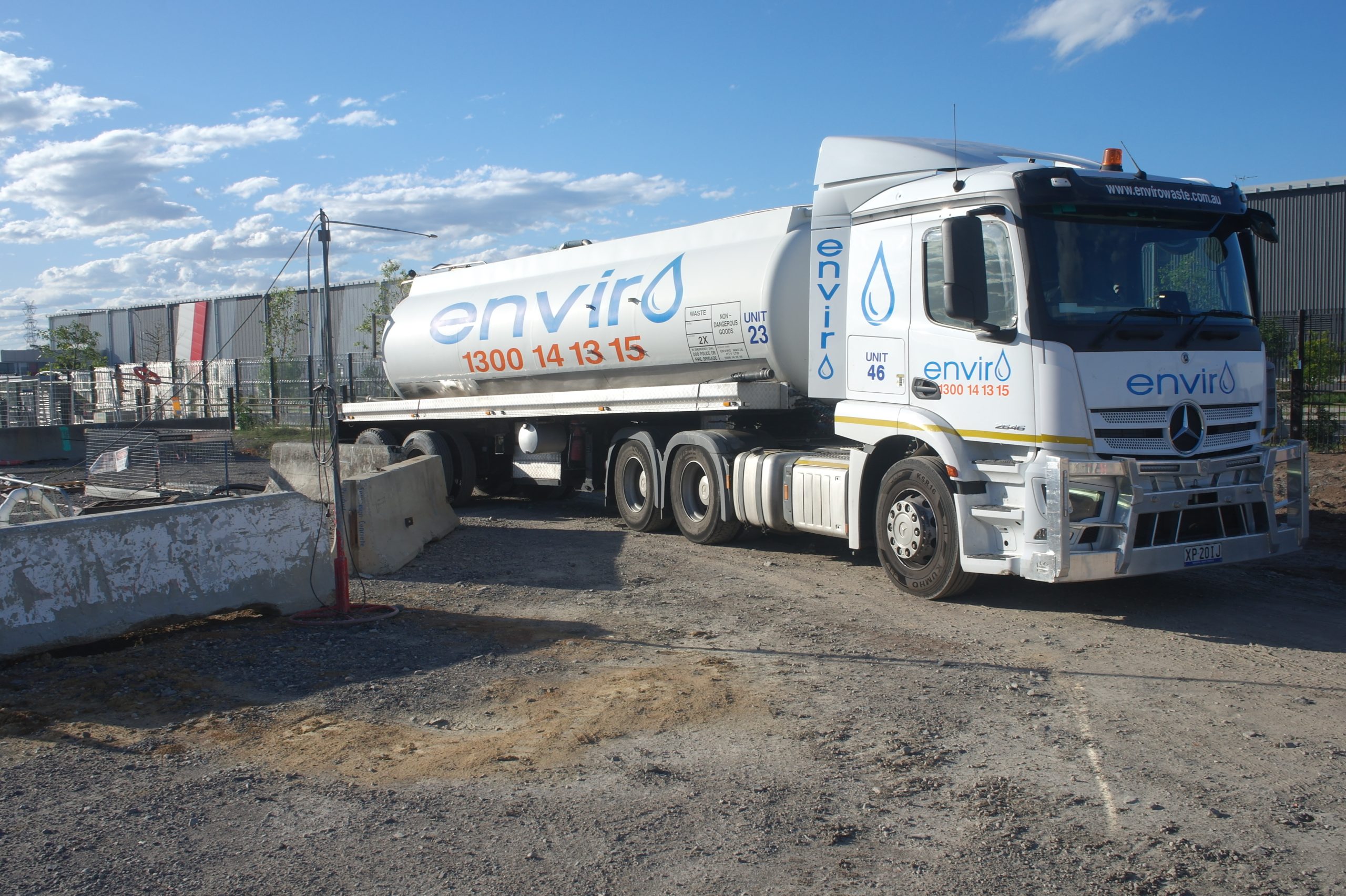
Enviro Waste works with industrial facilities across NSW to manage hazardous liquid waste end-to-end, from on-site collection and correctly completed transport documentation through to licensed disposal at an EPA-accredited facility. Every job is fully documented and every load is traceable. If your facility generates hazardous liquid waste and you are not completely confident in your current compliance position, a review is always worthwhile. Contact Enviro Waste on 1300 141 315 to discuss your facility’s requirements.